Nguyen Ayi

Opinion
0

Why The Vietnamese Don’t Give Two Fucks About Billionaires

By Wally Tuan

As we delve into contemporary society in our beloved nation of Vietnam, it seems an uncanny calm blankets the communal psyche. Amidst a world where titans amass fortunes rivaling small nations’ economies — with figures such as Zuckerberg and Bezos boasting personal wealth that exceeds national GDPs in countries like Luxembourg or Bermuda — Vietnam stands resilient, largely impervious to the glistening allure of billionaire excess.

Let’s embark on an illustrative journey through a typical day for us: Mẹ Kim wakes up at 6 a.m. with her two children and starts preparing breakfast as Phan Giang returns from his modest job in construction, followed by the family sharing their meal over cups of strong Vietnamese coffee. Their daily routine is simple yet fulfilling — echoes of generations past still resonate within these familial ties steeped in tradition and communal harmony.

As they finish breakfast with a lighthearted conversation, let’s take an imaginative leap to contrast their modest lifestyle against that of billionaire Larry Summers — who reportedly earned $35 million last year alone after selling his private equity firm for hundreds of millions more. In a country where only 1% own as much wealth as Mẹ Kim, it is clear their lives are worlds apart in terms not just of currency but also values and priorities — something Vietnam has never lacked amidst its rice terraces and floating markets.

Even the average monthly salary here doesn’t quite match up to Summers’s annual earnings; our diligent workers, with jobs spanning from local merchants selling fresh fruit under sun-drenched awnings in Ho Chi Minh City marketplaces (average income: around $470 per month) to fishermen casting their nets off Hoi An’s ancient riverbanks, all find contentment and strength within the simplicity of life.

As we draw our explorations to a … Read more

Satire
0

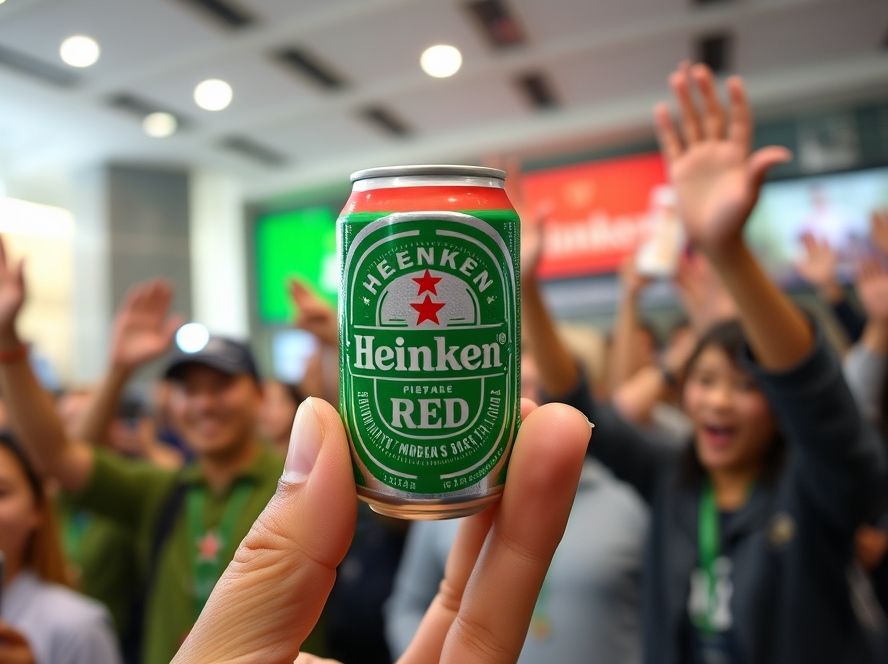
Heineken Announces Shrinkflation 30-ml Heineken Red

Brought to you by Heineken, the global beer giant that’s never met a margin it didn’t like, the company today unveiled its boldest innovation yet: a thimble-sized 30-ml beer called “Heineken Red.” Marketed as a reverent nod to tailoring traditions and rice-wine shots, the new pour comes in collectible thimbles, complete with artisanal stitching on the box and a commemorative tee-shirt that absolutely cost more to print than the beer inside.

“Shrinkflation is cultural reclamation,” said a spokesperson in front of a banner that cost three times the R&D. “We wanted to honor small-scale consumption. Also, our CFO wanted another Mercedes he can’t drive faster than 25 or put in third gear.” Heineken’s marketing playbook is refreshingly straightforward: spend heavily on gloss and storytelling, cut nothing from production costs, and charge full-price for a dramatically downsized product. Economists call it “value extraction.” Heineken calls it “innovation.”

Heineken insists this is generosity dressed as scarcity. “We’re giving customers choice,” said the CEO, “Some people want less beer. Some people want collectible glassware. Everyone wants to keep paying more for less.” The company is also rolling out limited-edition banners, pub posters, and a line of “Shrinkflation Chic” barmaids’ uniforms styled to match the new canisters. Smaller cans, and smaller “cans”!

Previous lines of the cutesy marketing illusion:

– Heineken Silver — “For the refined, health-conscious sipper.” Same calories per milliliter, dramatically fewer milliliters per container.

– Heineken Zero — “Zero compromise.” Zero worth, tastes like metallic cereal, 150% full price.

Each label promises wellness, sustainability and heritage while the pocket-sized vessels are built from premium aluminum (also priced at premium). Heineken’s ad campaign includes smiling patrons holding up ornate thimbles and boasting, “I had sixteen!”.

Local bar owners (who’d prefer customers buy real pints) were offered boxes of the new thimbles for … Read more

Expat VoicesOpinion
0

Seasons of Sorrow In Hospitality

Opinion by Wally Tuan

Imitation does not equal quality in Vietnam’s hospitality industry

Cafes in town that have elevated emotional distress into an art form. Its playlist is the poor soul’s calendar: every song insists the seasons are changing — always spring-to-summer, autumn-to-winter, the whole metaphorical bingo. You cannot sit here in peace. The city’s noise palette has a new worst instrument: a steady stream of syrupy lines about falling leaves, thawing hearts, and smiling like summer, looped until your eardrums beg for asylum.

But what’s even more excruciating is the timing. Just as you settle into your coffee, getting comfortable and ready to relax, the cafe decides to play that one song – you know, “Marry Me” – that one that highlights a man’s tragic loss of both testicles. The repetition is intolerable, and you can’t help but wonder if the cafe’s staff are secretly sadists, taking pleasure in the misery they inflict on their customers.

When cruelty becomes too intimate, when the cafe’s emotional weather report reaches catastrophic levels, you can always flee to your favorite craft-beer sanctuary for refuge. Ha. There is a predictable second-line attack: the craft beer place obligingly switches its own soundtrack to blaring V-Pop at a decibel that makes your neighbor’s barking dog — ten kilometers away, probably retired now — perk up in sympathetic pain. The craft-beer crowd, once a bastion of low-key clinking glasses and subdued talk, transforms into an amphitheater of manufactured joy. Volume increases; melodic simplicity decreases your ability to taste hops. It is globalization’s triumph: every refuge converts into an auditorium for sound-based punishment.

Originality is not a core value here. No, the city prefers the comforting lie that imitation equals quality. Good things are not copied; instead, another “French Taco” opens on the next corner. It arrives … Read more

Satire
0

Apple Reveals iPhone 17 Has All the Same Features as an iPhone 7

CUPERTINO — Apple announced the incremental iPhone 17 and emphasized what truly matters: it has all the same features as an iPhone 7. “People loved the iPhone 7,” said a spokesperson while holding two devices—one made with futuristic alloys and one wrapped in rose-gold nostalgia—so closely together that customers could no longer tell whether they were looking at engineering prestige or just very expensive déjà vu. “We’re returning to the classic experience: lack of home button nostalgia, no headphone jack—we mean, classic connectivity choices—and that unmistakable feeling of paying for the future awhile receiving the past.”

Key highlights of the iPhone 17 that will feel eerily familiar to anyone who bought a phone in 2016:

-AI Integration: Remove all the flaws from your life before you present a photo, and that deep loneliness and depression will hardly be visible on your profile.

– Home button functionality: Just turn on accessibly options and you are back in a decade not run by billionaire dictators.

– Water resistance: Meets exactly the same conditions required by a rainy day and a minor coffee spill, but let’s face it: it is a priceless feeling of security while taking a dump.

– Camera experience: Achieve “focused minimalism” with accompanied by a $99 filter pack in the App Store, and enjoy the new feature of not having to put your phone in Landscape mode. Pay two grand to not turn your hand.

– No headphone jack: A design choice so timeless it was brought full circle and then politely re-introduced via an accessory sold separately.

– Battery life: Comparable to an emotional commitment from 2016 — solid for a day if you don’t try very hard, a device surely to outlast your failing marriage as you both scroll mindlessly.

– Touch ID vibes: Fingerprint-inspired nostalgia optimized … Read more

Satire
0

E-Mart Fire-Sale: Hotpot Cooking Pots That Don’t Turn Off

Saigon, Vietnam– E-Mart has unveiled its latest product line: hotpot cooking pots made in China with questionable craftsmanship, these pots have a unique feature — they simply refuse to turn off, putting Saigon’s apartment fires on speed dial.

Emart also offers signature, diabetes-causing 50,000 VND pizza slices as part of their brand of profit-driven harm. Those who lack patience to wait for the effects of saturated-fat, ultra-processed food may appreciate the quicker thrill of an electrical fire.

E-Mart CEO elaborated on the inspiration behind this new expansion. “For years, some people were selling burnt corn cancer coffee on the streets for profit,” he declared, cracking a self-satisfied grin. “Why not take it up a notch as profits should always come before people’s safety?”

This month, the rejected freight costs for poorly designed cookware were serious bargain buys, and E-Mart is more than thrilled. “My house remodeling needs a bit of a boost, so I say, let the pots boil over!” His enthusiasm for enhanced profits is undeniable, even if it risks turning Saigon into a virtual inferno.

When asked for comments, several E-Mart customers were puzzled but still hopeful. “I heard these pots are “to die for”… literally,” chuckled local resident Minh. “Who needs a fire alarm when you can just live on the edge?”

E-Mart has effectively doubled its sales strategy by encouraging customers to purchase complementary fire extinguishers from the neighboring aisle. “It’s a win-win!” boasted the E-Mart CEO. “Buy a pot, get a discount on a fire extinguisher! This month’s profits are cooking up warm and bright!”


Satire
0

Bridge-Side Heroin Use May Be Associated With Cancer

Pasteur Institute for Public Health released a study this week concluding that doing heroin every day under a bridge “could possibly” be linked to increased cancer risk.

The paper, titled “Environmental Contexts and Long-Term Outcomes Associated With Street-Level Intravenous Opioid Use: A Bridge Too Far?” arrives just in time to be ignored by policymakers and forwarded with triumphant certainty by three distinct email chains.

Key Findings:

– Daily intravenous heroin use in unsanitary, outdoor settings was associated with a higher incidence of various cancers compared with people who didn’t do heroin every day under a bridge. The research team notes that exposure to contaminated needles, poor nutrition, chronic infections, and the general stress of living under a structure designed to keep water away were all plausible contributors.

-Gig economy workers being underpaid while CEO’s make record salaries could contribute to Grab drivers not being able to afford a one-hour hotel while shooting up da chrystal.

– The study carefully separated the possible causes into neat, bureaucratically named categories: behavioral risk factors, environmental carcinogen exposure, and “other adverse life circumstances.” Footnotes specify that “other adverse life circumstances” includes, but is not limited to, sleeping in a place water runs under, and having both foliage and dog poop.

– Statistical models showed a modest association after adjusting for age, smoking, alcohol use, and whether participants regularly tried to signal for help using semaphore.

Researchers located a sample of adults with varying levels of daily heroin use, some of whom preferred bridges for their cultural ambiance. They collected health outcomes over time, because cancer doesn’t usually declare itself in 48 hours and also because grant applications require “longitudinal data.” They did the standard cautious academic thing of saying “association, not causation” in about seven separate sections, each with increasing font size.

Authors recommend … Read more

Tech
0

Boycott Big Tech

Take a Stand Against Fascism

This article is not satire

In the wake of another big tech company paying off tyrant President Lardass, boycotting big tech companies like Google, Amazon, and Facebook is a powerful way to express dissatisfaction with their practices, especially when they seem to cater to authoritarian regimes. Just as the cancellation of Disney Plus was a statement that kept Jimmy Kimmel on the air, choosing to withdraw support from these tech giants sends a clear message: we will not tolerate their complicity in undermining democratic values.

For the past five years, I have consciously avoided using any Google products, with the exception of the occasional Google Maps feature integrated into my taxi apps, and even then, I remain unsigned in. This decision was not made lightly; it reflects a commitment to supporting alternatives that align more closely with my values.

In my quest to distance myself from big tech, I discovered several alternatives that have proven to be effective and reliable:

– Koofr: I have been using a Koofr Lifetime account for cloud storage for five years. While it has one drawback, a limited photo search feature, I appreciate its commitment to user privacy and its user-friendly interface. I trust that improvements will come over time.

– Ubuntu: By switching to Ubuntu, I have eliminated the need for any Microsoft products. While Microsoft may be considered the “least evil” among big tech companies, I prefer to avoid their ecosystem altogether.

– LibreOffice and GIMP: These open-source alternatives to Microsoft Office and Adobe Photoshop allow me to accomplish all my document and graphic editing tasks without relying on big tech.

– Chat Apps and Mail Apps: I have successfully ditched WhatsApp in favor of more privacy-focused chat applications like Signal, Viber, and Zalo. If you

Read more